Sunday, November 29, 2020

Obsessive-Compulsive Disorder

 Obsessive- Compulsive Disorder

Obsessive- Compulsive Disorder (OCD) is common and chronic disorder in which an individual displays uncontrollable impulsive thoughts or obsessions about having to repeat a task or behavior multiple times (NIMH, 2020). Individuals could experience obsessions, compulsive thoughts or both happening at the same time. One example could be cleaning a dirty spot over and over again because it seems that it is unable to get clean enough. Another example could be taking multiple showers after touching something dirty as well. Individuals with this disorder can also develop a tic disorder, which is an uncontrollable or sudden brief moments of repetitive movements with the eyes and other parts of the body (NIMH, 2020). Some examples of this could include jerking of the shoulder, eye billing or twitching, facial grimacing and many others (NIMH, 2020).

Signs and Symptoms

The signs and symptoms of this disorder can vary depending on if the individual is having obsessions or compulsive thoughts or both happening at the same time. 

Some signs could include having things in perfect order, checking locks or other things around the area or house or self diagnosing self with medical conditions. 

Individuals with obsessions may experience

- Fear of germs or contamination: Touching something the individual deems as dirty

- Having forbidden or impulsive thoughts regarding different taboos related to sex, religious aspects, or harm

- Aggressive or angry thoughts about themselves or others

Individuals with compulsive thoughts

- Doing tasks in a specific order that is familiar to them a certain amount of times until it is idealized as good to them

- Having the urge to count things whether it be their steps or other things around them

- Having fear of touching public objects or physical contact with individuals.

Treatment of OCD

Some treatment options involve medications and varies forms of psychotherapy. It would be up to the licensed professional to find a treatment is suitable for the individual. Some forms of medication could be Clomipramine, Fluoxetine, Paroxetine, and Sertraline (Mayo Clinic, 2020). Some forms of psychotherapy could include Cognitive Behavioral Therapy and Exposure and Response Prevention. The two forms of psychotherapy are a little bit tied together (Mayo Clinic, 2020).

Population

Any individual can have OCD, according to the Anxiety and Depression Association of America, "It currently affects approximately 1 in 40 adults and 1 in 100 children in the U.S." (Anxiety and Depression Associate of America, 2020). This was interesting to read about because of how big the U.S. it was shocking to read about how many people are diagnosed with OCD.

References

Bhandari, S. (2020, September 04). OCD: Types, Symptoms, Causes, Diagnosis, Treatment, and Related Conditions. Retrieved November 30, 2020, from https://www.webmd.com/mental-health/obsessive-compulsive-disorder

Obsessive-Compulsive Disorder (OCD). (n.d.). Retrieved November 30, 2020, from https://adaa.org/understanding-anxiety/obsessive-compulsive-disorder-ocd

Obsessive-compulsive disorder (OCD). (2020, March 11). Retrieved November 30, 2020, from https://www.mayoclinic.org/diseases-conditions/obsessive-compulsive-disorder/diagnosis-treatment/drc-20354438

Obsessive-Compulsive Disorder. (n.d.). Retrieved November 30, 2020, from https://www.nimh.nih.gov/health/topics/obsessive-compulsive-disorder-ocd/index.shtml


Sunday, November 8, 2020

Borderline Personality Disorder

 borderline personality disorder

Borderline Personality Disorder

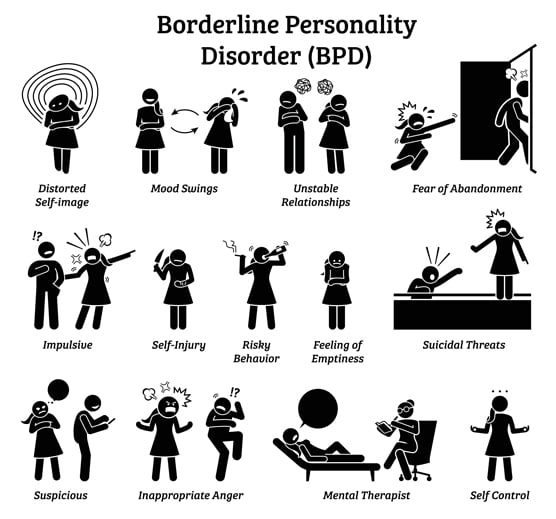
Borderline Personality Disorder is an illness that consists of various consist mood changes, self-image and behavior problems. This disorder causes individuals to think impulsively and creates a huge hurdle within relationships because of the actions that the individuals does. Individuals with this disorder are often plagued with intense emotions such as abandonment. According to Mayo Clinic, "Yet inappropriate anger, impulsiveness and frequent mood swings may push others away, even though you want to have loving and last relationships" (Mayo Clinic, 2019). Individuals with this disorder often have issues with maintaining healthy relationships because they often go through serious of mood swings that often leave their partners puzzled and may push them away. This disorder may be diagnosed in early adulthood, but may be discovered in early childhood with it progressing for the worse within them. Individuals with this disorder do have a chance of a normal life with proper treatment and management of the disorder.

Signs and Symptoms

  • Intense fear of abandonment, evening going to extreme measures to avoid real or imagine separation or rejection (Mayo Clinic, 2019).
  • Having an ongoing pattern of unstable relationships by displaying a negative image of their partner and misbelieving their intentions.
  • Various changes in self-identity and self-image; shifting of goals and values and idealizing your self in a negative life as if you are not there.
  • Impulsive and risky behavior such as drunk driving, not practicing safe sex, spending sprees, binge eating and drug usage or sabotaging the self by ending a good job or a good relationship without no necessary cause
  • Suicidal threats or self-injury due to fear of separation or rejection
  • Widespread of mood swings lasting from hours to days including intensified emotions of the individual such as happiness, irritation, anxiety, etc.
  • Feeling of emptiness over a long period of time
  • Intense anger at inappropriate times
Treatment

One treatment option for borderline personality disorder include talking with a professional about the way the individual has been thinking and also taking tests as well. According to NIMH, "Borderline personality disorder has historically been viewed as difficult to treat... But, with newer, evidence-based treatment, many people with the disorder experience fewer or less severe symptoms, and an improved quality of life" (NIMH, 2020). It seems as if taking with a licensed professional or counselor are good treatments options for this disorder because individuals with this disorder are about to discuss how they have been feeling and are diagnosed. National Institute of Mental Health also points out, "Completing a thorough interview, including a discussion about the symptoms, Performing a careful and thorough medical exam, which can help rule out other possible causes of symptoms and Asking about family medical histories, including any history of mental illness" would be some ways on how professions would help diagnose this disorder (NIMH, 2020). With further research, I was able to find out that some individuals also undergo psychotherapy as a treatment options and medications are not the front line treatment option for individuals with this disorder.

Population

According to Borderline Personality Disorder Statistics, "In the United States, recent research has shown that 1.6% of the population has BPD... That number may seem small, but when you consider just how large the United States is, you may realize that 1.6% represents quite a large number of people" (Borderline Personality Disorder Statistics, 2020). By gender, women are far more likely to be diagnosed with BPD than men with 75% of women being diagnosed with BPD (Borderline Personality Disorder Statistics, 2020). There is not much research on why women are diagnosed more with this disorder, however men with this disorder may have a higher chance of being misdiagnosed with other disorders than with this order (Borderline Personality Disorder Statistics, 2020). It was very interesting learning about the gender differences in diagnosing this disorder within men and women.

References

Borderline personality disorder. (2019, July 17). Retrieved November 08, 2020, from https://www.mayoclinic.org/diseases-conditions/borderline-personality-disorder/symptoms-causes/syc-20370237

Borderline Personality Disorder. (n.d.). Retrieved November 08, 2020, from https://www.nimh.nih.gov/health/topics/borderline-personality-disorder/index.shtml

Kristalyn Salters-Pedneault, P. (2020, January 21). Striking Statistics About Borderline Personality Disorder in the U.S. Retrieved November 08, 2020, from https://www.verywellmind.com/borderline-personality-disorder-statistics-425481

Picture: https://www.dummies.com/health/mental-health/borderline-personality-disorder-for-dummies-cheat-sheet/

Obsessive-Compulsive Disorder

 Obsessive- Compulsive Disorder Obsessive- Compulsive Disorder (OCD) is common and chronic disorder in which an individual displays uncontro...